Ender's Game by Orson Scott Card

In order to develop a secure defense against a hostile alien race's next attack, government agencies breed child geniuses and train them as soldiers. A brilliant young boy, Andrew "Ender" Wiggin lives with his kind but distant parents, his sadistic brother Peter, and the person he loves more than anyone else, his sister Valentine. Peter and Valentine were candidates for the soldier-training program but didn't make the cut--young Ender is the Wiggin drafted to the orbiting Battle School for rigorous military training.

Ender's skills make him a leader in school and respected in the Battle Room, where children play at mock battles in zero gravity. Yet growing up in an artificial community of young soldiers, Ender suffers greatly from isolation, rivalry from his peers, pressure from the adult teachers, and an unsettling fear of the alien invaders. His psychological battles include loneliness, fear that he is becoming like the cruel brother he remembers, and fanning the flames of devotion to his beloved sister. 

Is Ender the general Earth needs? But Ender is not the only result of the genetic experiments. The war with the Buggers has been raging for a hundred years, and the quest for the perfect general has been underway for almost as long. Ender's two older siblings are every bit as unusual as he is, but in very different ways. Between the three of them lie the abilities to remake a world. If the world survives, that is.


Positive Content:
Ender is a great character who always tries to do right.  He is incredibly young - likely too young for the situations he's placed into.  Everything is a test, to see how he would respond, to see if he would make an ideal leader in battle.  He isn't perfect, and frequently makes mistakes. But he has a good conscience.  He thinks about how his actions will affect those around him, and when he makes mistakes, he feels guilt over them.
He may be a soldier, but he is not violent at harm.  In fact, it is easy for readers to feel bad for his situation - because, in a way, he is more of a victim.


Possible Objectionable Content:
This book is very violent, as the kids at the battle school often get into fights outside of class.  However, the fights aren't just "filler" - every punch thrown has a purpose.  Regardless, there is still plenty of fighting, described in detail.
Also, the boys at the battle school can often be crude and vulgar.  There is much bad language throughout the book.


Conclusion:
Ender's Game is an excellent story which dives into many morally challenged issues, such as child prodigies and genocide.  When reading this book, one cannot help but think if the generals in authority are right in putting such young children in the circumstances of the novel, and teaching them to fight and have enemies.
The boys at the school, or even Ender's brother, may be cruel and violent.  Even the generals leading the war are focused on winning, rather than exhibiting right morals. But Ender is not like the others, and he truly has a good heart.  He may be a part of a war - but his character is good through it.  In fact, I'll end with this quote, because it really shows what a reflective, good character he is, despite his young age.  
"In the moment when I truly understand my enemy, understand him well enough to defeat him, then in that very moment I also love him."

Rating: 9/10
Recommended Age: 13+
Genre: Science Fiction
Part of a series?: Ender's Game series, book one

The Book Thief by Markus Zusak

Brief Summary:
It is 1939. Nazi Germany. The country is holding its breath. Death has never been busier, and will become busier still.
By her brother's graveside, Liesel Meminger's life is changed when she picks up a single object, partially hidden in the snow.  It is The Grave Digger's Handbook, left there by accident, and it is her first act of book thievery.  So begins a love affair with books and words, as Liesel, with the help of her accordion-playing foster father, learns to read.  Soon she is stealing books from Nazi book-burnings, the mayor's wife's library, wherever there are books to be found.
But these are dangerous times.  When Liesel's foster family hides a Jew in their basement, Liesel's world is both opened up and closed down.
In superbly crafted writing that burns with intensity, award-winning author Markus Zusak has given us one of the most enduring stories of our time.


Positive Content:
Hans Hubermann, Liesel's foster father, is exceedingly kind and generous.  Regardless of the danger it could cause to their family, he takes in Max, the Jew, because he made a promise to one of his relatives.  When the Jews are being marched by the Nazis through their town, he tries to give one of them a loaf of bread, and is severely punished and called a "Jew-lover."  But he doesn't care.  He shows grace and kindness to everyone, even in the worst of circumstances. Although Rosa Hubermann, Liesel's foster mother, often yells and curses at the girl, she truly cares for her.  Her true nature is shown by her actions, instead of her fierce words.  She cares for Liesel and Max, and accepts them into her home, even though food is scarce.  Although she hides it, she is a kind and generous person as well. 

Liesel prays to God to protect Max.  The two connect; she reads him books, and later on, he writes a story for her.  The bond between the two is strong and prevails over all the other horror of the time.  Max is extremely grateful to the family, and makes a sacrifice to protect them.


Possible Objectionable Content:
Liesel's foster mother uses a lot of foul language, including several German profanities.  Naturally, Liesel begins to pick up the habit of swearing.  Cursing isn't shined upon - yet there is a lot of it throughout the story.  Also, a boy often teases Liesel by asking for a kiss.
The story is told from the point of view of Death, and he often mentions "taking souls." However, he is not a heartless, cruel narrator as one might expect.  But nonetheless, there are many different descriptions of violence.  People are whipped.  There are air raids, and bombs fall on the town.  A man commits suicide by hanging himself.  


Conclusion:
This is a heartbreaking book about World War II, from a different perspective.  The narrator, Death, took some getting used to, but once I got into the book, it was impossible to put down.  This truly is a tragic period in history, and it's important that we all learn from it.  This book shares several good messages, such as "you can't just stand by and let evil happen" and "it's important to keep your promises, no matter what the cost."  Despite the abundant bad language, it really is a great story about the horrors of this time period time, and the love that often prevailed.


Rating: 10/10
Recommended Age: 15+
Genre: Historical
Part of a series?: no

Slated by Teri Terry


Brief Summary:
Kyla’s memory has been erased,
her personality wiped blank,
her memories lost for ever.

She’s been Slated.

The government claims she was a terrorist and that they are giving her a second chance - as long as she plays by their rules. But echoes of the past whisper in Kyla’s mind. Someone is lying to her, and nothing is as it seems. Who can she trust in her search for the truth?


Positive Content:
Kyla is an innocent, sweet character who easily springs off the page.  You can't completely relate to her - given her situation, with her memory being wiped and all - but, by the end of the book, she feels like a friend.

She may have been a terrorist in the past, but she certainly isn't inclined to violence now.  She does make mistakes, but she's not evil at heart.  She has a kind, gentle heart, even though she really doesn't know who she is.


Possible Objectionable Content:
There isn't a lot of bad content, but the idea of having terrorists having their memory wiped can be a little bit scary at times. This book has a bit of a psychological thriller element, so there are a few themes that require thought.  For that reason, this book would be better for older ages who can process what they think about how the government treats teenage terrorists.  Is their system of Slating a good one?  It's definitely an idea that takes thought.
Kyla breaks the rules of her foster family a few times and also lies to the authorities.  In a nightmare, she has visions of a man smashing her fingers with bricks.  There are multiple mentions of violence, but Kyla doesn't get involved in fights.
Two characters have a friendship which turns into a romantic relationship, but it's innocent and sweet.  Kyla's older sister often sneaks out with a boy who her parents don't approve of, and use Kyla to cover for them.

Conclusion:
This series doesn't get near enough popular acclaim. Kyla is one of the strongest heroines out there in modern young adult fiction.  Even with having no memory, she has so many different layers to her.  She's strong.  She's sweet.  She's innocent.  She doesn't fit into any one stereotype, unlike many other YA characters.  The way she navigated herself through this story wasn't forced at all.  It was natural.  

And the writing was incredible. It pulled me in and kept me hooked for the entire 300 pages.  There weren't many dull moments.  When Kyla has a few glimpses into her past, the dreams and flashbacks weren't boring and irrelevant. They gave snippets of information, revealing just enough to explain parts, while also leaving mystery. I couldn't say enough praise about the way this story was structured and written.

The cliffhanger at the end was agonizing, but promising.  I didn't like the cliffhanger - at all - but I think my main disappointment was that this book had to end. It was one of the best, most creative things I've ever read.


Rating: 10/10
Recommended Age: 14+
Genre: Dystopian/Thriller
Part of a series?: Slated series, book one.

Insurgent by Veronica Roth


Brief Summary:
One choice can transform you—or it can destroy you. But every choice has consequences, and as unrest surges in the factions all around her, Tris Prior must continue trying to save those she loves—and herself—while grappling with haunting questions of grief and forgiveness, identity and loyalty, politics and love.

Tris's initiation day should have been marked by celebration and victory with her chosen faction; instead, the day ended with unspeakable horrors. War now looms as conflict between the factions and their ideologies grows. And in times of war, sides must be chosen, secrets will emerge, and choices will become even more irrevocable—and even more powerful. Transformed by her own decisions but also by haunting grief and guilt, radical new discoveries, and shifting relationships, Tris must fully embrace her Divergence, even if she does not know what she may lose by doing so.


Positive Content:
Tris realizes what mistakes she has made in the previous book, and has to come to terms with some of her choices.  For example, she finds it difficult to hold a gun and shoot.  She doesn't kill with ease, as some of the other characters do.  She finds it genuinely difficult - she isn't a person inclined to violence.


Possible Objectionable Content:
Characters fight throughout the story; they are shot, punched, stabbed, and knocked unconscious.  There are mild descriptions of blood. Two characters repeatedly kiss and even share a bed at times.  However, their relationship doesn't go any farther than passionate kissing. There are a few mild profanities.

Conclusion:
This book was really slow at the start.  It took a long time to get to anything of real interest, but once it got going, I couldn't put it down.  The middle-to-end was absolutely riveting, with a lot of unexpected twists and turns.  And the ending was extremely unexpected.  A terrible cliffhanger, and a bit confusing, but it was excellent.

This book gets a little deeper into some issues than the first one did.  Also, it attempts to show the good sides of every faction.  It doesn't villainize a factor and say what they believe is wrong.  It shows that there are good people in every group; innocent, loving people who just want to better the world.  The Erudite aren't "wrong" for pursuing knowledge; the Candor aren't "wrong" for being honest.  In the same way, it attempts to show us that one faction trait isn't better than another.  We should strive to have all the traits, and not to look down on the people who are different.Also, this book gets a little deeper into some issues than the first one did.  For example, it attempts to show the good sides of every faction.  It doesn't villainize a factor and say what they believe is wrong.  It shows that there are good people in every group; innocent, loving people who just want to better the world.  The Erudite aren't "wrong" for pursuing knowledge; the Candor aren't "wrong" for being honest.  In the same way, it attempts to show us that one faction trait isn't better than another.  We should strive to have all the traits, and not to look down on the people who are different.


Rating: 9/10
Recommended age: 13+
Genre: Dystopian/Romance
Part of a series?: Divergent series, book two

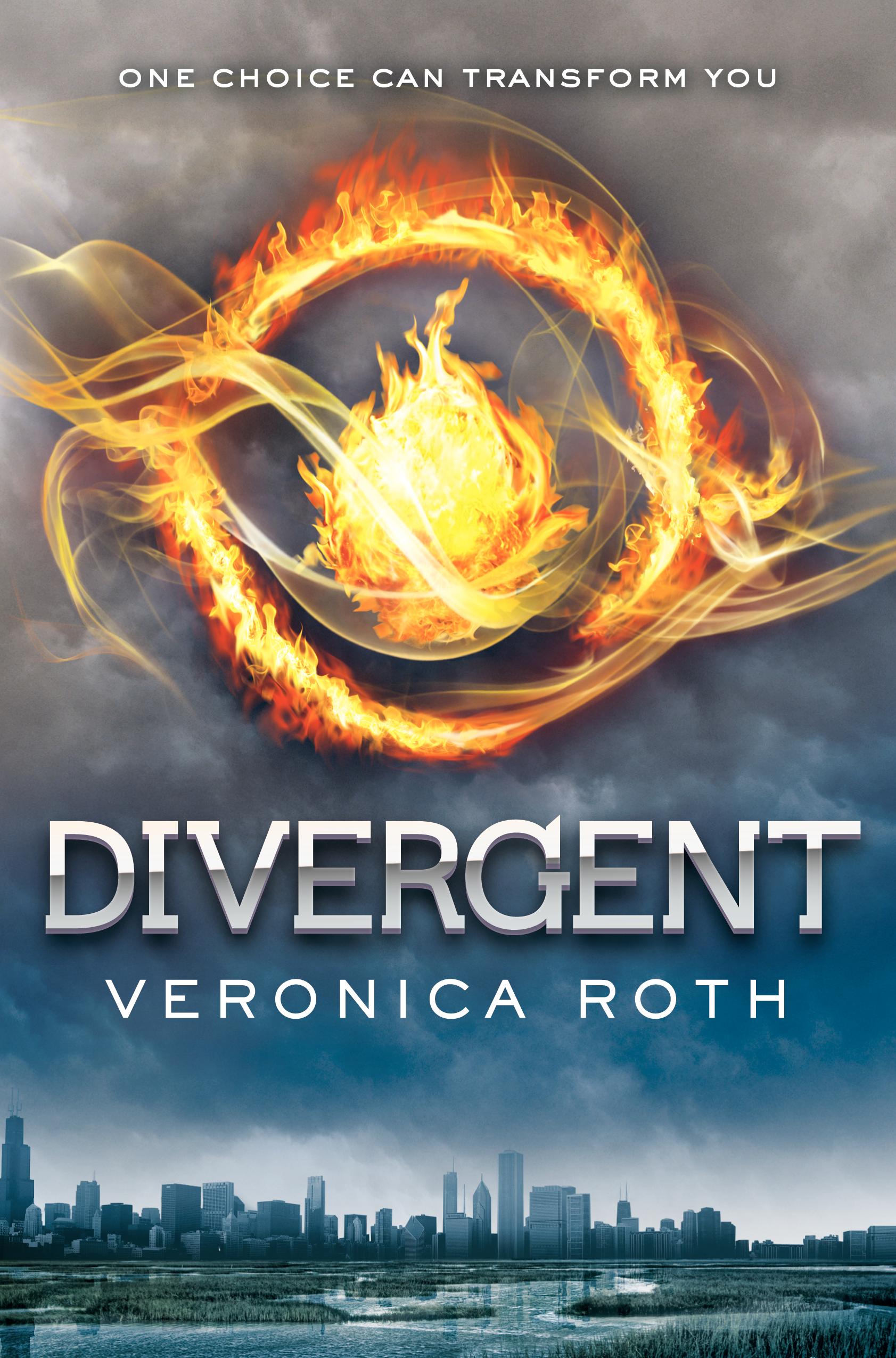
Divergent by Veronica Roth

Brief Summary: 

In Beatrice Prior's dystopian Chicago world, society is divided into five factions, each dedicated to the cultivation of a particular virtue--Candor (the honest), Abnegation (the selfless), Dauntless (the brave), Amity (the peaceful), and Erudite (the intelligent). On an appointed day of every year, all sixteen-year-olds must select the faction to which they will devote the rest of their lives. For Beatrice, the decision is between staying with her family and being who she really is--she can't have both. So she makes a choice that surprises everyone, including herself.

During the highly competitive initiation that follows, Beatrice renames herself Tris and struggles alongside her fellow initiates to live out the choice they have made. Together they must undergo extreme physical tests of endurance and intense psychological simulations, some with devastating consequences. As initiation transforms them all, Tris must determine who her friends really are--and where, exactly, a romance with a sometimes fascinating, sometimes exasperating boy fits into the life she's chosen. But Tris also has a secret, one she's kept hidden from everyone because she's been warned it can mean death. And as she discovers unrest and growing conflict that threaten to unravel her seemingly perfect society, Tris also learns that her secret might help her save the ones she loves . . . or it might destroy her.


Positive Content:
Tris Prior is a naive, innocent girl when the story begins.  She has to make a lot of choices along the way, causing her to grow up.  She doesn't always make the right choices, but it certainly seems as if she's trying.  She may be fiercer than she looks, but inside she's a truly selfless person.  She would never hesitate to step in and save a friend.

Possible Objectionable Content:
Initiation is hard and violent.  Initiates are taught how to shoot and throw knives, and forced to fight one another.  Characters are injured and killed, and there are mild descriptions of injuries and blood. A girl is briefly assaulted. Also, there are several usages of mild bad language, and characters kiss their significant others. 

Conclusion:
Divergent is an interesting book because of how it divides the people into factions based on character traits.  People can't just be sorted like that, and a lot of conflict ensues because of these divisions.  This is what separates Divergent from all the hundreds of others of Dystopian fiction novels out there.  It's not just another Hunger Games copy; it's a completely different world with different characters and a different story.  It's a story about choice and sacrifice.  There are lots of choices Tris is forced to make - and she doesn't always make the right ones - but she tries her best to make choices that benefit others, rather than herself.

Tris is a girl who doesn't know where she belongs - a character many teenagers can relate to.  She thought choosing a faction would define her life, but it's not that simple.  She just wants to fit in, and have a normal life, until she realizes how being special isn't always the worst thing.

It may be a simply written young adult book, but Divergent definitely has some good messages, as well as a heroine that is flawed, yet noble.

Rating: 9/10
Recommended age: 13+
Genre: Dystopian/Romance
Part of a series?: Divergent series, book one

Thirteen Reasons Why by Jay Asher


Brief Summary:
Clay Jensen returns home from school to find a strange package with his name on it lying on his porch. Inside he discovers several cassette tapes recorded by Hannah Baker - his classmate and crush - who committed suicide two weeks earlier. Hannah's voice tells him that there are thirteen reasons why she decided to end her life. Clay is one of them. If he listens, he'll find out why. Clay spends the night crisscrossing his town with Hannah as his guide. He becomes a firsthand witness to Hannah's pain, and learns the truth about himself-a truth he never wanted to face.


Positive Content:
Clay is really a "good-guy" model throughout the story.  He doesn't use people like some of the other characters.  He's certainly not perfect, but he's not a bad guy.

Hannah's story is absolutely heartbreaking, and really shines a lot on how much of an issue teenage suicide is in this day and age.  She wasn't a completely terrible person either; she just made a lot of mistakes, and people chose to start terrible rumors about her.


Possible Objectionable Content:
Clay lies to his mother about where he is and steals from his friend.  Characters lie and insult one another.  Hannah is the victim of a lot of drama and the center of many bad situations. The things people say about her are very harsh and sometimes inappropriate. The majority of these rumors are false, but Hannah does do a few sinful things. There are multiple usages of bad language, also.

Also, the book centers around the suicide of a teenage girl.  Although it's not looked at as a good thing, it's definitely a deep, dark topic that can't be taken lightly.

Conclusion:
Thirteen Reasons Why is an excellently written story, yet sadly, very realistic.  These "thirteen reasons" push teenagers to chose suicide all too often.  And even more sadly, it's almost always preventable.  If people had only listened to her or only been kind to her, Hannah never would have chosen to kill herself instead of enjoying her life.  Although heartbreaking, this book is definitely worth a read, as it really makes you think twice about gossiping about people behind their back - you never know if those rumors are true, and who they might hurt.

Rating: 10/10
Recommended age: 16+
Genre: Contemporary/Romance
Part of a series?: no

Storm by Evan Angler

http://www.jillwilliamson.com/wp-content/uploads/2012/07/Storm.jpg
Brief Summary:
In a future United States under the power of a charismatic leader, everyone gets the Mark at age thirteen. The Mark lets citizen shop, go to school, and even get medical care—without it, you are on your own. Few refuse to get the Mark. Those who do . . . disappear.

Logan Langly went in to get his Mark, but he backed out at the last minute. Ever since, he’s been on the run from government agents and on a quest to find his sister Lily, who disappeared when she went to get her Mark five years earlier. His journey leads him to befriend the Dust, a vast network of Markless individuals who dissent against the iron-grip rule of the government. Along the way to the capital to find Lily, the Dust receive some startling information from the Markless community, opening their eyes to the message of Christianity and warning that humanity is now entering the End of Days. 

In Storm, Logan and his friends are the leaders of the Markless revolution. But while some Markless are fighting Chancellor Cylis’ army, the Dust is busy trying to find a cure for a horrible epidemic sweeping through the Marked. And it’s difficult for them to know who to trust, especially when they aren’t sure if Logan’s sister Lily, one of the commanders in Cylis’ army, is on their side or not. And all across the nation—and the world—the weather has become less stable and a storm is brewing that bigger than any of them could have ever imagined.


Positive Content:
I really did enjoy this series, and I felt that this book was the best of them all.  The multiple points of view didn't distract me in this one, as I felt that the author only wrote about the characters most important to this story.  In fact, it was neat to get inside several of the character's heads and see what they thought about everything.

The best part about the later books in a series is seeing how much the characters have grown and changed.  It's always great to look back at book one and see the differences in personality and actions.  Many questions I had from the previous book were answered and that was satisfying.

Possible Objectionable Content:

Characters continue to break laws and disobey authorities.  There is a bit of violence in this book, but nothing bloody or gory, or that a young reader couldn't handle.

Conclusion:

This is a great book and I really enjoyed it.  I know the Swipe series is written for middle-grade readers, but I'm a teen and it still captivated me, even though the characters were all about thirteen. There were several things that I didn't care for, however.  One was the backstory from all the different characters. My opinion of it was that if I already heard it from one person,  I didn't need to hear the same story again.  The other thing is that the book just....ended.  I guess there was a resolution, but it felt like I needed more answers! I needed a sudden turn of events.  Maybe it's just me, but that annoyed me more than anything.

If you haven't read this series yet, pick it up and give it a try!  You won't be disappointed.


Rating: 8/10
Recommended age: 10+
Genre: Christian/Dystopian
Part of a series?: Swipe series, book three

The New Recruit by Jill Williamson


Brief Summary:
Forced to choose between military school and a Christian spy organization, skeptic Spencer Garmond signs on with the Bible geeks. But before he even boards the plane for Moscow, Spencer realizes this is no Bible club.

These guys mean business.

Stumbling onto a case involving a gang of homeless boys, a chilling tattoo, and the always beautiful Anya Vseveloda, Spencer struggles to find the faith needed to save the Mission League from enemy infiltration.


Positive Content:
The main character, Spencer, was quirky and likable, and I enjoyed having the book from his point of view.  He made mistakes, but he learned from him.  He wasn't just some "super-spy" kid that always steps in and saves the day.  Of course, he is the hero of the story, but not directly how I would have expected.  Also, this book had a bunch of great messages about Christianity without being preachy.  It spoke from a very Biblical worldview without stuffing it down the reader's throats.  I enjoyed that.

Possible Objectionable Content:
Spencer lies to his friends and elders, but he learns from it.  Also, he curses a lot but the words are never used in the book.  Any mistakes that the characters make aren't glorified, and they always learn a Biblical principle form their mistakes.

Conclusion:
The New Recruit was a pretty good Christian spy book, however, I had a few issues with it.  For one, it was a bit far-fetched.  A spy agency of just kids?  Sure, teenage books usually have quite a few unrealistic elements, but I thought this one just went a little far.  Also, I feel like the teenage-spy thing has been overdone.

So, despite having a likable character and good Christian elements, this book didn't really capture my attention.  However, for someone who enjoys this genre, it's definitely a good book to try. 

Rating: 6/10
Recommended Age: 13+
Genre: Christian/Action
Part of a series?: The Mission League, book one